


Article: A Comparison of Green Tea vs White Tea: Which Is Right?
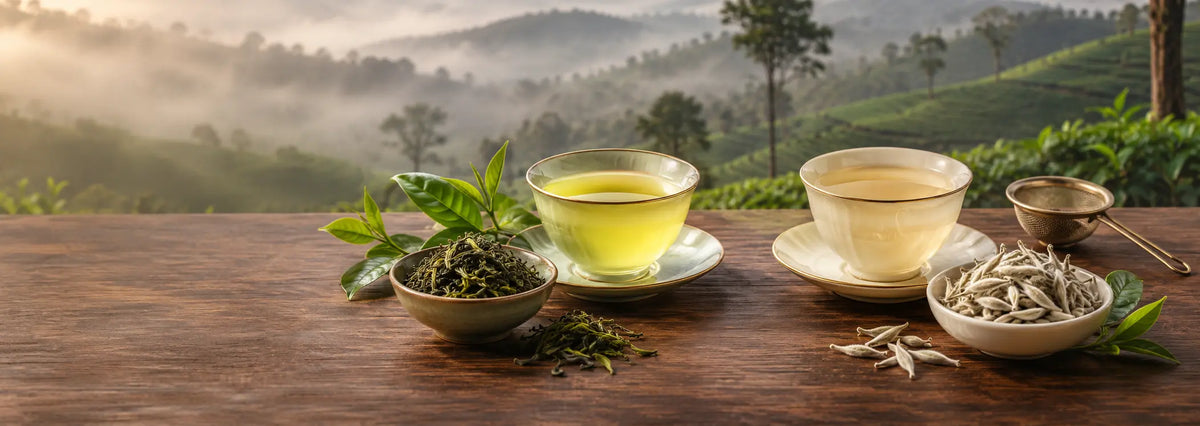
A Comparison of Green Tea vs White Tea: Which Is Right?
Stand in front of a shelf of tea, and the colours start to feel like a code. Green tea is registered in our minds for health, while white is for something special and premium. But this isn’t all you need to know about these tea varieties. In this blog, we dive deep into these two varieties, breaking down each and comparing them side by side.
Quick Overview:
Green and white teas all come from the same plant, Camellia Sinensis. The point that creates the difference is what happens after it's picked. This results in many changes following each other, like:
- The colour in your cup
- The taste,
- The caffeine
- When you might want to drink it
This guide walks through all of it in plain terms, helping you choose the cup that suits you.
Tea Profiles Compared: Side by Side
| Green Tea | White Tea | |
|---|---|---|
| What's done to the leaf | Heated soon after picking to stop oxidation, then rolled and dried | Withered and dried, with little or no rolling |
| Leaf | Young shoots | Young buds, or bud and one or two leaves |
| Cup colour | Pale yellow to yellow-green | Pale gold to champagne |
| Taste | Fresh, grassy, nutty or sweet | Soft, floral, lightly sweet, little bitterness |
| Caffeine, typical cup | Roughly 20–50mg | Roughly 15–55mg |
| Water | 80–85°C | 75–85°C |
| Steep | 2–3 minutes | 3–5 minutes |
| With milk? | Not recommended | Not recommended |
| Lovely for | Midday, after lunch | A slow, quiet pause |
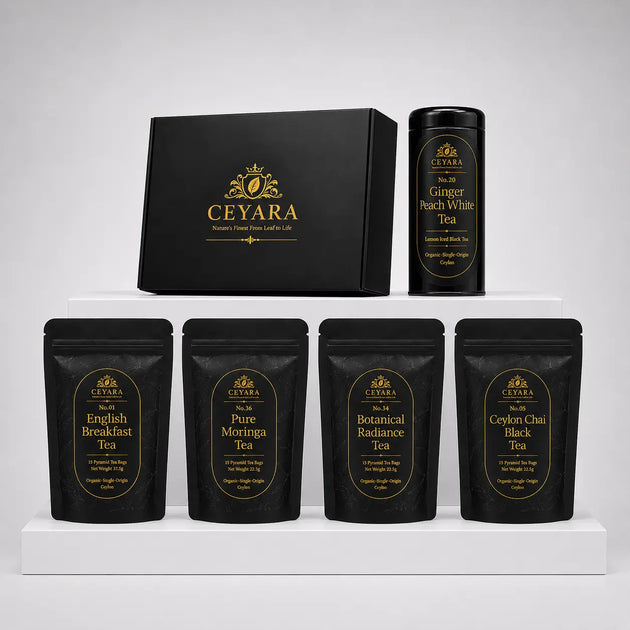
| Ceyara's Teas to Try | Jasmine Green | Ginger Peach White |
Caffeine figures are rough guides. Your cup will vary with the tea, how much you use, and how long you steep.
One leaf, two journeys
After picking, a tea leaf starts reacting with air. That reaction is oxidation, and it's the same thing that turns a cut apple brown. A tea maker chooses what to do with it.
- For white tea, they do very little. Young buds and leaves are picked and are let to wither slowly and dry. That's close to the whole process, which is why white tea tastes so soft and why the leaf has to be excellent to start with. It's named for the fine, silvery hairs on the buds, not for its colour in the cup.
-
For green tea, stop the reaction. Heat the leaf quickly, by pan-firing (typical in China) or steaming (typical in Japan), or both (in Ceylon). So, it stays green. Then roll and dry it.
A Small Warning on Color
The name describes the leaf, not always the cup. White tea brews pale gold. Green teas can sometimes. In China, what we call black tea is called red tea. And rooibos, sometimes sold as "red tea", isn't tea at all. More on that below.
Which tea will you like? A simple guide
Ask yourself the question: what will you enjoy drinking? Find yourself in this list below;
I find black tea too heavy, but want some caffeine - Green tea is ideal, because it is lighter, fresher, and has less body.
I prefer an aromatic and gentle essence of tea - Floral green and white teas are available. Scented teas like jasmine green are among the highlights.
I have a sweet tooth but want no sugar - Both white and fruity green teas match your sweet craving. They have natural sweetness without anything added.
I want a delicate-tasting tea for my sensitive stomach - White teas are your choice, without a doubt.
I have teeth staining concerns - The less processed white tea is the least possible for discoloring yiur teeth with time. Or, just use a straw for green tea.
Caffeine: the myth of "white tea is lower end and green tea at the higher end"
All teas contain caffeine. The common rule, that white has the least and black the most, is a loose pattern. What really decides the caffeine in your cup is the availability of more young buds, hotter water, and longer extraction.
White Tea:
Standard brew: 3 to 5 minutes (80–85°C / 175–185°F)
Low-caffeine/quick brew: 1 to 2 minutes
Green Tea:
Standard brew: 2 to 3 minutes (75–80°C / 165–175°F)
Low-caffeine/quick brew: 1 minute
Other "colours": oolong, yellow, dark tea and herbal infusions. Where do they sit?
- Oolong is partly oxidised, between green and black. It can be floral, creamy, or roasted.
- Yellow tea is a rare Chinese tea, closer to green, with a slow, gentle warming step.
- Dark tea, such as pu-erh, is aged or fermented, and earthy.
-
Herbal infusions (chamomile, peppermint, rooibos) aren't tea. They come from other plants and are naturally caffeine-free.
Try a side- by-side cup tasting at home
The best way to answer "which one is for me?" is to taste them side by side. It takes fifteen minutes. Choose one tea of each colour. Try to keep them plain or lightly scented.
Use two matching cups, ideally glass or white, so you can see the colour.
Brew each at its own temperature (see the table above), using the same amount of water.
Taste in this order: white, green. Delicate first, or the other will flatten.
Take a sip, then pause. Notice the colour, the smell, the first taste and what lingers after you swallow.
Write one line for each. "Soft and sweet", "fresh, a bit grassy", "rich and warming". The words you reach for tell you what you like.
You can add a plain biscuit between cups, and rinse your mouth with water after each sip for a more effective taste.
Choose by moment
If mid-morning or after lunch - Go for green teas.
If it's a quiet afternoon or catching up with a special friend - Go for a cup of white tea.
For building these into the day, our guide to a daily tea ritual can help. And if you're thinking of swapping coffee for tea, see why more people are choosing tea over coffee.
The honest summary
There's no best colour. Green tea is fresh and grassy, white tea is soft and quiet, and all three can be part of a good day. The research doesn't crown a winner. So pick by taste, brew each the way it likes.
If you'd like to taste the difference for yourself, start with our green tea and white tea collections.

Written by Ceyara Ltd


Leave a comment
This site is protected by hCaptcha and the hCaptcha Privacy Policy and Terms of Service apply.