


Article: How to Make Green Tea: The Complete Guide
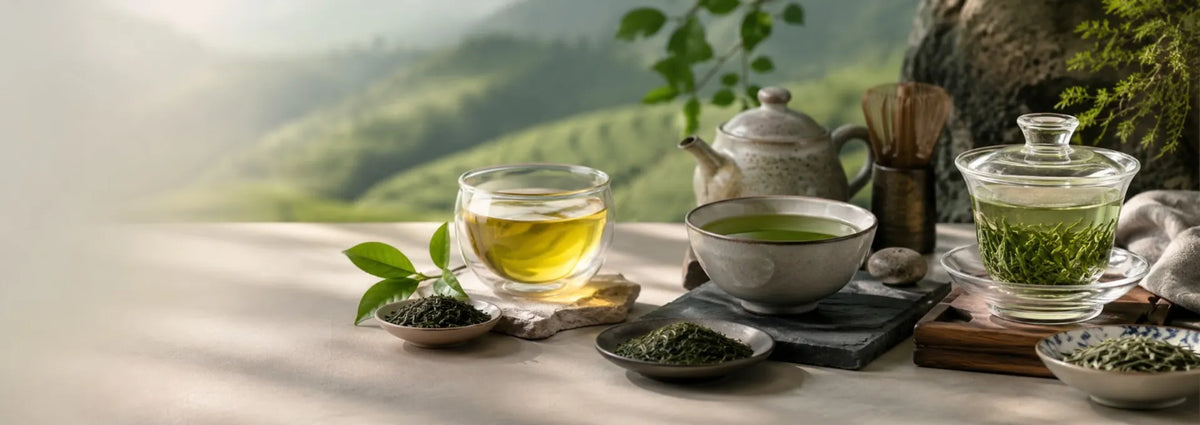
How to Make Green Tea: The Complete Guide
If you have bad experiences with green tea, you likely haven’t brewed it properly. Yes, the bitter, grassy cup you remember is almost always a brewing problem.
But once you know why green tea misbehaves, it's one of the easiest teas to get right. This guide gives you the method that works for any green tea, then goes further: what changes between tea bags and loose leaf, how floral-scented teas and gunpowder-based fruit blends each ask for slightly different handling, how to make a properly good iced version, and the UK-specific details like hard water, kettles that only know one temperature, things that most guides skip.
The Short Version
-
Measure about 2g of tea per 200–250ml of water. That's one bag, or loose leaf by weight rather than by spoon.
-
Heat fresh, filtered water to 80–85°C, not boiling. (Delicate Japanese-style teas such as sencha prefer a little cooler, around 70–80°C.)
-
Steep for 2–3 minutes (1–2 for delicate Japanese-style tea).
-
Remove the bag or leaves as soon as the time is up.
-
Savour it plain, while the aroma is at its best.
Everything below explains why these numbers work, and how to adjust them.
Why Green Tea Is So Easy to Get Wrong
Black tea is fully oxidised, which darkens and mellows the leaf and makes it forgiving. Green tea skips that step, so the leaf keeps its fresh, vegetal character. And two groups of compounds pull in opposite directions in your cup.
Catechins (the best known is EGCG) and caffeine bring bitterness and astringency. Amino acids, mainly theanine, bring sweetness and a savoury, almost broth-like depth. Hot water extracts catechins and caffeine quickly; amino acids come out readily at lower temperatures. That one fact explains most of green tea's reputation: boiling water and a long steep pull out the harsh compounds faster than the gentle ones.
The research points the same way. A review in the Japan Agricultural Research Quarterly describes how cold-brewed sencha is far less bitter and astringent than the same tea brewed hot, because EGCG and caffeine are hard to extract in cold water, leaving the amino acids to dominate. A separate study of Turkish green tea found total catechin levels fell as water temperature rose, and that extending the brew at 85°C eventually reduced the yield of some catechins rather than increasing it.
So the aim isn't "as hot as possible" or "as long as possible". It's balance: warm enough to open the leaf and release aroma and sweetness, cool and short enough to leave the harshness behind. Temperature, time, and leaf-to-water ratio are your three dials. The water itself is the fourth.
Before You Brew: Water, Temperature and Measuring
Start with the water
Tea is about 99% water, so it's the one ingredient you can't ignore, and in the UK it matters more than most people realise. Much of the east and south of England has hard water, rich in calcium. Studies say calcium reacts with the polyphenols in tea, which is where the scummy film and the darker, thicker-looking cup can come from.
Tea expert Jane Pettigrew of the UK Tea Academy has also pointed out that hard water dulls delicate flavour and aroma, exactly what you don't want from a floral or fruit-led green tea.
The fix is simple: use filtered or bottled water. It's kinder to your kettle too. Hard water is perfectly safe to drink, so this is purely about flavour.
Expert tip: Freshly drawn water is a sensible habit, but the idea that re-boiled water noticeably changes the flavour of tea is contested. Water hardness makes a far bigger difference, so spend your attention there first.
Getting to 80–85°C without a fancy kettle
Green tea wants water that is hot but not boiling, and many standard kettles only know one temperature. The usual advice is "boil, then wait", but the waiting times you'll see quoted range from under a minute (water poured into an empty cup) to seven or eight minutes (a full kettle left with the lid open). Kettle size, cup material, and room temperature all change the answer.
Three reliable ways around it:
Use a temperature-controlled kettle. Set it to 80°C or 85°C, and you're done.
Calibrate once. Boil, pour 200ml into the mug you actually use, drop in a kitchen thermometer, and note how long it takes to fall to 85°C. That's your personal wait time from then on.
Mix to temperature. Replace about a fifth of the boiled water with cold tap water. The sums work: 160ml at 100°C plus 40ml at around 20°C lands at roughly 84°C, a little lower once the mug absorbs some heat. It's the one method that doesn't depend on your kettle or the clock.
Measure by weight, not by spoon
A teaspoon measures volume, and green tea comes in wildly different shapes. A teaspoon of tightly rolled gunpowder pellets holds far more leaf than a teaspoon of open, fluffy leaf; the same weight of tea can look like a scant teaspoon of one and a heaped tablespoon of another.
A sound starting point is about 2g per 200–250ml. A small digital scale removes the guesswork for loose leaf. Our own pyramid bags are portioned at around 2g, which sits right in that range. One of the quiet advantages of a bag is that the dose is already done for you.
Getting to 80–85°C without a fancy kettle
Green tea wants water that is hot but not boiling, and many standard kettles only know one temperature. The usual advice is "boil, then wait", but the waiting times you'll see quoted range from under a minute (water poured into an empty cup) to seven or eight minutes (a full kettle left with the lid open). Kettle size, cup material, and room temperature all change the answer.
Three reliable ways around it:
-
Use a temperature-controlled kettle. Set it to 80°C or 85°C, and you're done.
-
Calibrate once. Boil, pour 200ml into the mug you actually use, drop in a kitchen thermometer, and note how long it takes to fall to 85°C. That's your personal wait time from then on.
-
Mix to temperature. Replace about a fifth of the boiled water with cold tap water. The sums work: 160ml at 100°C plus 40ml at around 20°C lands at roughly 84°C, a little lower once the mug absorbs some heat. It's the one method that doesn't depend on your kettle or the clock.
Measure by weight, not by spoon
A teaspoon measures volume, and green tea comes in wildly different shapes. A teaspoon of tightly rolled gunpowder pellets holds far more leaf than a teaspoon of open, fluffy leaf; the same weight of tea can look like a scant teaspoon of one and a heaped tablespoon of another.
A sound starting point is about 2g per 200–250ml. A small digital scale removes the guesswork for loose leaf. Our own pyramid bags are portioned at around 2g, which sits right in that range. One of the quiet advantages of a bag is that the dose is already done for you.
The Method: Five Steps for Any Green Tea
1. Measure. About 2g per 200–250ml. Too much tea is a common cause of bitterness; too little gives a flat, thin cup.
2. Heat. Fresh, filtered water at 80–85°C, using whichever method above suits your kettle.
3. Steep. Start your timer when the water meets the leaf, not when you sit down. Two to three minutes suits most rolled and Chinese-style greens. Taste at two minutes before committing to three.
4. Remove. Tea keeps brewing for as long as leaf and water are in contact, which is why a pot of green tea left standing turns harsh. Lift out the bag or strain the leaf the moment the time is up.
5. Savour. Green tea is best plain. Much of its character is aroma, and aroma fades as the cup cools, so drink it while it's warm rather than letting it sit.
What a good cup looks like: pale gold to yellow-green, clear and bright. If it's dark, brownish, or cloudy, the water was too hot, the steep too long, or your water too hard.
Pyramid Tea Bags or Loose Leaf? A Green Tea Specific Comparison
When it comes to brewing green tea, what really matters is the quality of the leaf and whether it has room to open.
Start by agreeing on one fact. Neither format is automatically better, and anyone who says otherwise is usually selling one of them. What matters is the quality of the leaf and whether it has room to open. A bag of whole, rolled leaf in a spacious pyramid can beat a loose tea that's mostly dust; a good loose leaf in the right pot will give you more control than any bag.
|
Pyramid Tea bags |
Loose leaf |
|
|
Convenience |
Comes pre-portioned, avoids spilling and clean-up |
Needs measuring and straining |
|
Consistency |
Same dose every time |
Depends on you, and on leaf shape |
|
Control |
Limited to timing and temperature |
Full control of ratio, vessel and infusions |
|
Room for the leaf to expand |
Depends on bag design; a spacious pyramid gives more than a flat bag |
Most, with the right pot or infuser |
|
What you can see |
Very little |
The leaf itself: size, colour, whole or broken |
|
Re-steeping |
Possible once, with thinner results |
Often two or three good infusions |
|
Suits |
Everyday cups, work, travel |
Slow sessions, comparing teas, experimenting |
One thing worth knowing: many conventional flat bags use finely broken leaf, the fannings grades we cover in our Ceylon tea grades guide, which infuses quickly. That suits a strong black tea. It's less ideal for a delicate green that wants space to unfurl, which is why bag design matters more for green tea than for black.
Brewing Green Tea Bags
-
One bag per cup. Bags are portioned as a single serving, so resist the urge to stretch one across a larger mug; you'll get a thin, flat cup.
-
Follow the pack's time, then taste. Smaller broken leaf releases flavour faster than whole rolled leaf, so timings differ between brands.
-
Don't leave the bag in. The timer only works if you remove the bag when it ends.
-
Cover the cup while it steeps. A saucer on top traps aromatics that would otherwise escape with the steam, which is especially worthwhile for floral and fruit blends.
-
A second cup is possible, not equal. Expect a lighter result; more on that in the re-steeping section.
Brewing Loose Leaf Green Tea
Loose leaf asks for a little more equipment and attention, and repays you with control and visible quality.
Choose your vessel
-
A mug with a roomy basket infuser is the simplest setup. Avoid tiny ball infusers, which can cramp leaves that expand considerably as they steep.
-
A teapot with a removable infuser is ideal for sharing, and lets you lift out the leaves in one go.
-
A glass jug or cafetière works too. If you use one, pour every drop out when the time is up so the tea doesn't keep brewing in the pot.
-
A gaiwan (a small lidded bowl) suits the traditional Chinese approach: much more leaf for the water, very short infusions, and many of them.
The method
-
Weigh your leaf. About 2g per 200–250ml. If you're using spoons, remember the shape rule: a scant teaspoon of dense gunpowder pellets, but nearer a heaped tablespoon of bulky, open-leaf green.
-
Heat your water to the right range for the style (table below), using fresh filtered water.
-
Add water to the leaf and start your timer.
-
Strain completely when time is up.
-
Infuse again. Increase the time by about 30 seconds each round.
Starting points by style
|
Style |
Water |
First infusion |
Notes |
|
Rolled gunpowder |
75–85°C |
1–3 minutes |
Pellets unfurl slowly; often good for several infusions |
|
Jasmine-scented green |
75–85°C |
2–3 minutes |
Protect the aroma: don't go hotter |
|
Other Delicate Japanese-style teas (e.g., sencha) |
70–80°C |
1–2 minutes |
Most sensitive to heat |
These are starting points. Producers vary, so always check your tea's own instructions first, then adjust to taste.
If the cup is bitter, lower the temperature or shorten the steep. If it's flat or weak, add a little more leaf before you lengthen the time.
How to judge loose leaf quality
-
Whole, intact leaf rather than powder or dust.
-
Even colour, green to olive, not brown.
-
Fresh, clean aroma from the dry leaf.
-
For gunpowder: tight, uniform pellets. Tighter rolling generally signals higher quality and a longer shelf life.
Two Green Teas, Two Different Approaches
A good general method gets you most of the way. The last stretch comes from understanding what's actually in your cup. Two blends from our own range show how different "green tea" can be.
Jasmine Green Tea: Brewing for Aroma
Our Jasmine Green Tea starts with organic Ceylon green tea from Haputale and Boralanda, scented with jasmine blossoms grown in Haputale. It's portioned at around 2g per pyramid bag.
How jasmine tea is made.In the traditional method, freshly picked jasmine blossoms are layered with finished tea. As the flowers open overnight, the tea absorbs their aroma. The spent blossoms are then sifted out, and for high-grade teas the process can be repeated with fresh flowers anywhere from three to nine times. The aroma isn't an ingredient you taste so much as a perfume held in the leaf.
Why that changes how you brew it. Aromatic compounds are volatile; they escape with steam. Water that's too hot, or a steep that's too long, drives off the very thing you chose the tea for, while pulling forward bitterness. Hard water dulls floral aroma too.
The method:
1 bag per 200ml
80–85°C; if the florals taste sharp or the cup turns bitter, move towards the lower end
2–3 minutes
Cover the cup while it steeps
Drink plain; a small amount of honey is optional
What to look for: a clear, bright, pale yellow-green liquor. A darker or cloudy cup is your signal that the water was too hot or the steep too long.
Iced: brew one bag in half the usual water for a concentrate, let it cool, then pour over ice and dilute to taste. Cucumber ribbons, fresh mint, lemon, or lychee and white peach slices all work well.
Caffeine: roughly 20–35mg per 200ml cup, depending on steep time.
Berry Green Tea: Brewing a Gunpowder Base
Our Berry Green Tea is built on organic Ceylon gunpowder green tea from Haputale and Boralanda, blended with blueberry and cranberry and naturally flavoured with berry essence, no artificial flavours or colours. It's about 2g per pyramid bag.
What gunpowder tea is. Gunpowder green tea is leaf rolled into tight, small pellets, which unfurl as they steep. The compact shape releases flavour more slowly and steadily than loose, open leaf, which gives the tea a sturdier, smoother, slightly nutty base. That's what makes it a good partner for fruit: the base has enough structure to hold its own against the sweetness of blueberry and the brightness of cranberry.
Why that changes how you brew it. Fruit aromas are delicate, and the tea underneath turns vegetal and bitter if pushed. Brewing below boiling lets the berry notes come through, and over-steeping flattens the smooth finish.
The method:
1 bag per 200ml
80–85°C
2–3 minutes
Enjoy without milk; it masks the berry character
Best unsweetened; a little honey is fine if you like
What to look for: a bright yellow-green liquor with a delicate rosy-pink tint.
Iced: this is a blend that shines cold. Use the concentrate method, then serve over ice with fresh blueberries or cranberries, lemon, orange peel, or mint.
A second cup: pellet-style green tea is generous with repeat infusions when brewed loose. In a flavoured bag, expect the fruit to fade faster than the tea, so a second steep tends to taste more of the leaf and less of the berry.
Caffeine: roughly 20–35mg per 200ml cup.
At a Glance
| Jasmine Green Tea | Berry Green Tea | |
|---|---|---|
| Base | Organic green tea, scented with jasmine blossoms | Organic gunpowder green tea with blueberry and cranberry |
| Character | Floral, fresh, silky | Bright, fruity, lightly nutty |
| Amount | 1 bag (~2g) per 200ml | 1 bag (~2g) per 200ml |
| Water | 80–85°C | 80–85°C |
| Steep | 2–3 minutes | 2–3 minutes |
| Milk | No | No |
| Iced method | Concentrate over ice | Concentrate over ice |
| Priority when brewing | Protect the aroma | Protect the fruit and the smooth finish |
For the quick-reference settings across our whole range, see our Tea Brewing Guide.
Iced Green Tea: Two Methods
Method 1: Hot concentrate (fast). Brew at your normal temperature, but use half the water, steep as usual, let it cool, then pour over a glass of ice and dilute to taste. You're brewing stronger on purpose, because melting ice will dilute it. This keeps the aroma bright.
Method 2: Cold brew (slow). Use the same ratio as for a hot cup , one bag per 200–250ml , with cold or room-temperature water, and refrigerate for roughly six to twelve hours. Remove the leaf or bag and drink it within about a day. Because EGCG and caffeine extract poorly in cold water, the result is noticeably softer, sweeter, and less astringent, with less caffeine than a hot brew.
Which to choose? Hot concentrate when you want it now and want the aromatics sparkling. Cold brew when you want the gentlest, smoothest glass and can plan ahead.
One more UK-specific point: calcium in hard water can turn iced tea cloudy as it cools. Filtered water helps.
Re-steeping Green Tea
Good loose leaf green tea typically gives two or three worthwhile infusions, and gunpowder pellets can stretch further; some producers suggest up to five. Increase the steep time by about 30 seconds each round, and use the second infusion promptly.
Tea bags are a different story. A second cup is possible, but expect a thinner result, and with flavoured blends the delicate top notes, jasmine, fruit, tend to fade first.
When Something Goes Wrong
| Problem | Likely Cause | Fix |
|---|---|---|
| Bitter, harsh cup | Water too hot (above about 85°C) | Cool to 80–85°C; shorten the steep. |
| Dry, astringent mouthfeel | Steeped too long | Cut 30 seconds at a time. |
| Weak, flat, tasteless | Too little leaf, water too cool or steep too short | Add a little leaf first, then raise the temperature slightly. |
| Dark, brownish or cloudy | Water too hot or steep too long; possibly hard water | Lower temperature and steeping time; use filtered water. |
| Film or scum on the surface | Hard water reacting with tea polyphenols | Use filtered or bottled water. |
| Chlorine-like taste | Tap water | Use filtered or bottled water. |
| Jasmine or fruit aroma fades quickly | Water too hot, steeped too long, or no cover | Lower the temperature and cover the cup. |
| Iced tea turns cloudy in the fridge | Hard water | Use filtered water. |
Common Questions
Can you use boiling water for green tea?
It isn't ideal; boiling water extracts the harsh compounds quickly, giving a bitter, astringent cup. If you've boiled it by mistake, cool it for a few minutes or dilute with a little cold water (see the mixing method above).
How long should you steep green tea?
Two to three minutes suits most rolled and Chinese-style green teas; delicate Japanese-style teas often prefer one to two. Taste at the shorter time first. Longer steeping increases bitterness and astringency.
Can you add milk to green tea?
Green tea is traditionally taken plain, and milk tends to mask the delicate aroma, which is why we recommend drinking our Jasmine and Berry blends without it. Beyond that, it's your cup.
Can you reuse a green tea bag?
Once, if you like, but expect a lighter, thinner cup, and less of the floral or fruit character in flavoured blends.
Does the way you brew change the caffeine?
Yes. Hotter water and longer steeps draw out more; cold brewing extracts noticeably less. Our Jasmine and Berry Green Teas contain roughly 20–35mg per 200ml cup depending on steep time, compared with around 95mg in a typical cup of coffee. If you'd prefer none at all, our caffeine-free range is built for exactly that.
Is tea bag or loose leaf better for green tea?
Neither, automatically. Quality of leaf and room to expand matter more than format. Bags offer convenience and a pre-set dose; loose leaf offers control and multiple infusions.
Where to Go Next
– For quick brewing settings across every Ceyara tea, see our Tea Brewing Guide.
– To explore the range itself, browse our Ceylon Green Tea collection, the finest green tea bags in the UK, featuring our signature Jasmine Green Tea and Berry Green Tea.

Written by Ceyara Ltd


Leave a comment
This site is protected by hCaptcha and the hCaptcha Privacy Policy and Terms of Service apply.