

Introduction
Few teas are as renowned as Ceylon black tea. Grown in Sri Lanka's lush gardens, it is loved for its bright flavour and refreshing character. With over 150 years of tea-making heritage, Ceylon black tea offers a unique experience shaped by the island's climate and skilled craftsmanship.
In this guide, you'll learn what makes Ceylon black tea special, explore its history, discover Sri Lanka's tea-growing regions, and find tips for enjoying authentic Ceylon tea.
What Is Ceylon Black Tea?
Ceylon black tea is black tea exclusively grown in Sri Lanka, formerly known as Ceylon. The country's name changed in 1972, but the tea retained its historic identity because of its worldwide recognition for quality.
Ceylon black tea comes from the Camellia sinensis plant. Unlike green or white tea, its leaves are fully oxidised. This process gives the tea its rich amber colour, full body and distinctive aroma.
Depending on the region, Ceylon black tea can be light and floral or rich and bold. This versatility makes it one of the world's most enjoyable black teas.
The History of Ceylon Tea
Sri Lanka's tea journey began after the coffee industry collapsed in the late 1800s. A fungal disease known as coffee leaf rust devastated coffee plantations, pushing growers to find a new crop.
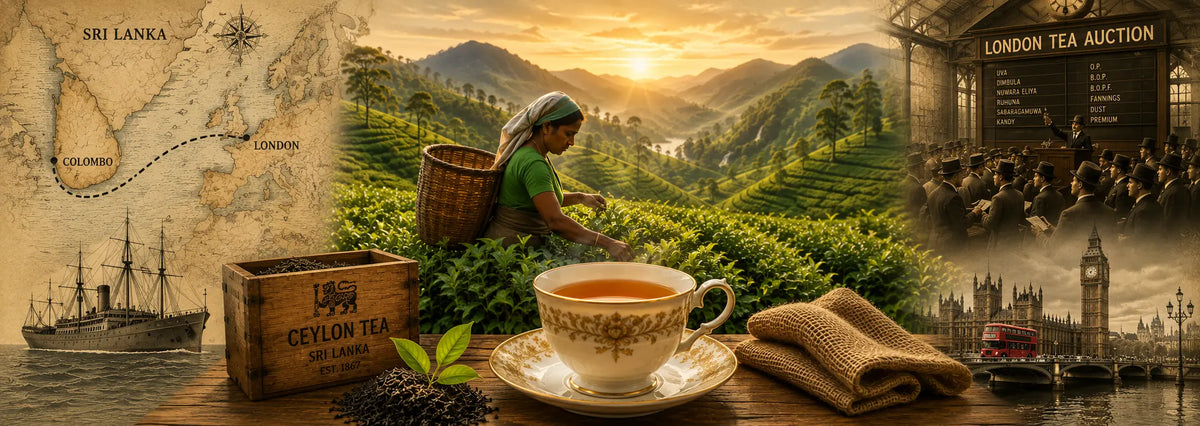
In 1867, Scottish planter James Taylor started the first commercial tea plantation at Loolecondera Estate near Kandy. This success laid the groundwork for a respected tea industry.
As tea cultivation grew, Colombo became a key centre for tea auctions and exports, helping Ceylon tea reach markets in Europe, Asia and the Middle East. Today, Sri Lanka remains a leading tea producer, with Ceylon tea symbolising quality and craftsmanship.
For a deeper look into Sri Lanka's tea heritage, read our guide to the history of Ceylon Tea in the CEYARA Journal.
Tea-Growing Regions of Sri Lanka
Ceylon black tea's distinctiveness comes from Sri Lanka's diverse tea-growing regions. Variations in altitude, climate, rainfall and soil create unique flavours.
Nuwara Eliya, the highest region, produces delicate teas with floral aromas and crisp citrus notes. Dimbula offers balanced teas with a refreshing finish, while Uva provides aromatic teas with fruity and floral notes.
Lower regions yield richer flavours. Kandy, the birthplace of Sri Lanka's tea industry, produces full-bodied teas that are ideal for enjoying with milk. Further south, Ruhuna is known for bold teas with deep colours and rich flavours, making them well suited to breakfast blends and chai.
These regions showcase how Sri Lanka's landscapes produce a remarkable range of black teas while maintaining the quality that makes Ceylon tea famous.
How Ceylon Black Tea Is Made
The unique taste of Ceylon black tea comes from a carefully managed process that combines traditional techniques with modern standards. Each step is crucial for developing the tea's flavour, aroma and appearance.
The process begins with plucking. Skilled pickers select the two youngest leaves and a bud from each plant. These leaves are then withered to reduce their moisture content, making them soft enough for the next stage.
Next comes rolling, which breaks the leaf cells and releases natural enzymes. During oxidation, the leaves react with oxygen, changing from green to deep brown and developing the bright, brisk flavour for which Ceylon black tea is known.
Finally, the leaves are dried to stop oxidation before being sorted, graded and packed.
Flavour Profiles and Tea Grades
One of the most appealing features of Ceylon black tea is its wide range of flavours. Depending on the growing region, you might experience bright, brisk, floral, citrus or malty notes. High-grown teas are often lighter, while lower-grown teas generally offer a fuller-bodied cup.
Tea packaging may include grading terms that describe the size and appearance of the leaves:
- Orange Pekoe (OP): Long, whole leaves that create a smooth infusion.
- Broken Orange Pekoe (BOP): Smaller leaf pieces that brew quickly and produce a stronger cup.
- Flowery Broken Orange Pekoe (FBOP): Broken leaves containing young leaf buds that contribute additional aroma.
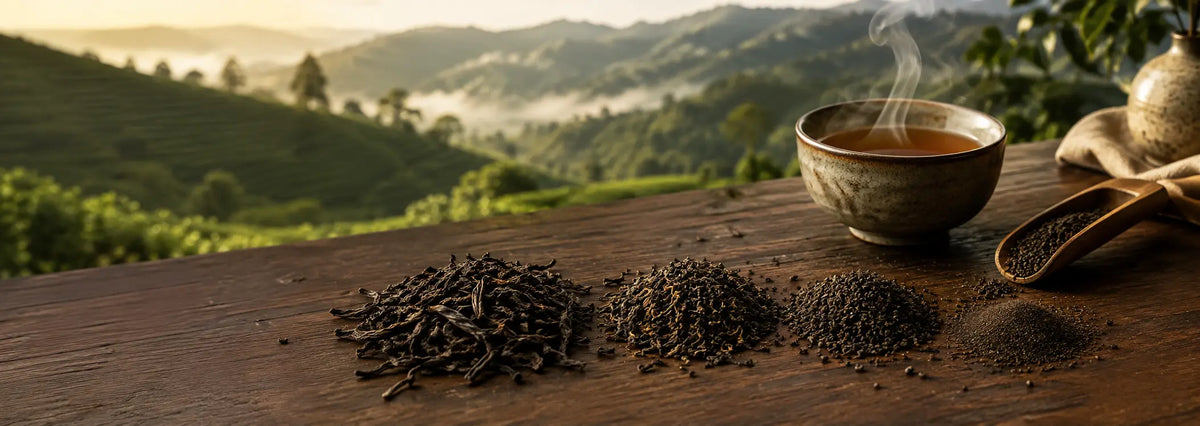
You may also see the terms Orthodox and CTC, meaning Crush, Tear and Curl. Orthodox teas maintain more of the leaf's natural shape, while CTC teas are processed into smaller particles that brew quickly and are commonly used in black tea bags.
How to Brew Ceylon Black Tea
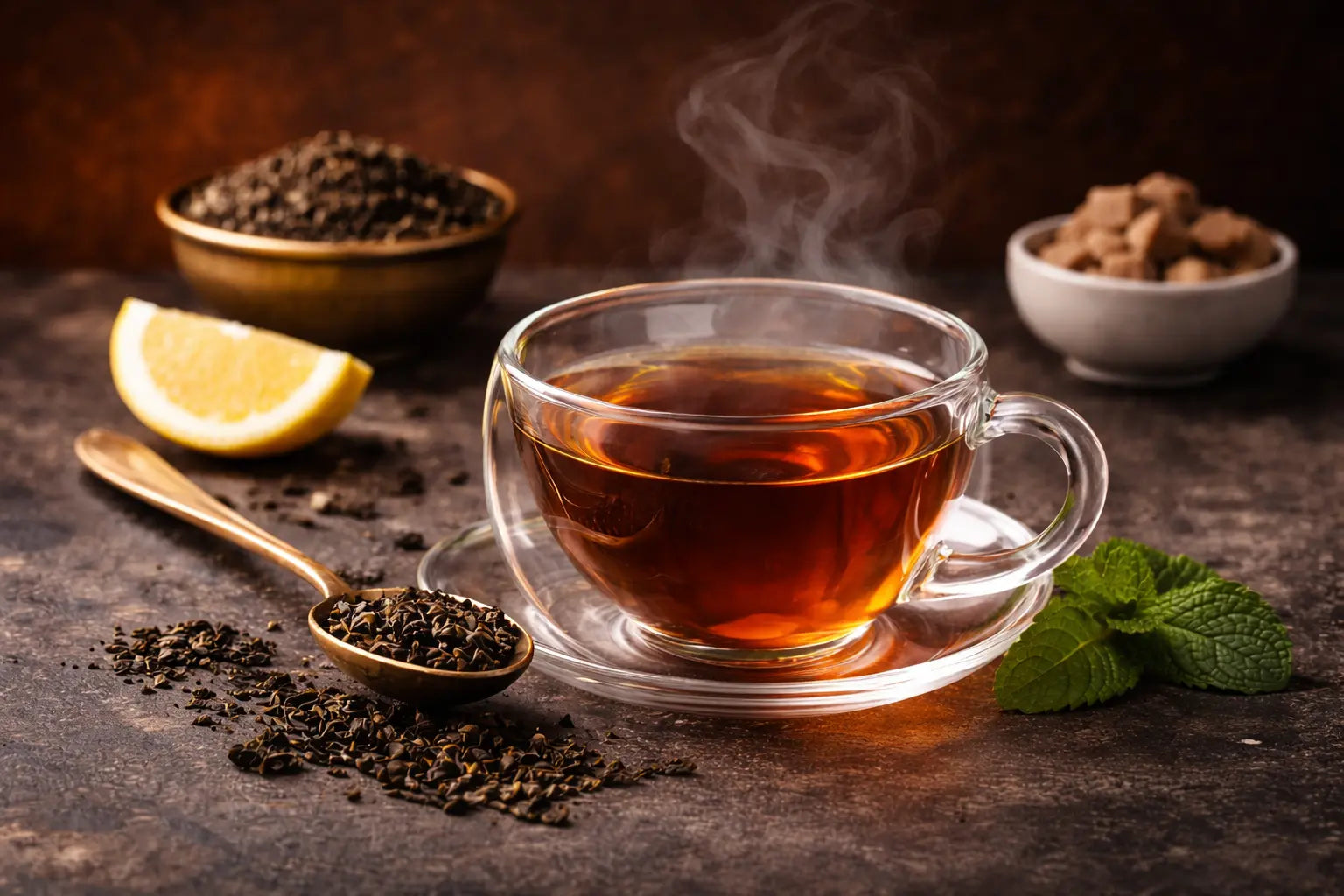
Brewing Ceylon black tea is simple, but a few small details can make a noticeable difference. Begin with fresh, filtered water and heat it to between 95–100°C (203–212°F). Freshly boiled water helps release the tea's flavour and aroma.
For loose-leaf tea, use approximately one teaspoon, or 2–3 grams, for every 250 ml of water. Steep the tea for 3–5 minutes, depending on your preferred strength.
A shorter infusion can highlight lighter floral notes, while a longer infusion creates a fuller-bodied cup.
Many Ceylon teas are delightful on their own, but richer varieties also pair well with milk. During warmer months, Ceylon black tea can be prepared as a refreshing iced tea or cold brew with lemon or mint.
Avoid over-steeping the leaves or repeatedly boiling the water, as both can result in a bitter or flat-tasting cup. For more brewing advice, explore CEYARA's Tea Brewing Guide.
Food Pairings and Simple Recipes
The bright, balanced flavour of Ceylon black tea pairs well with a variety of foods. It complements breakfast favourites such as toast, croissants and porridge and pairs beautifully with scones, shortbread, fruit cake and lemon drizzle cake.
Its refreshing finish also works well with lightly spiced snacks, including vegetable pastries and samosas.
Classic Milk Tea
Brew a strong cup of Ceylon black tea and add warm milk to taste for a comforting breakfast drink.
Iced Ceylon Tea
Brew the tea slightly stronger than usual, allow it to cool and pour it over ice. Add fresh lemon slices and mint for a refreshing finish.
Homemade Ceylon Chai
Simmer brewed Ceylon black tea with milk, cinnamon, ginger, cardamom and cloves to create a fragrant, warming drink.
Health Benefits of Ceylon Black Tea
Beyond its flavour, Ceylon black tea contains naturally occurring compounds that make it a popular everyday choice. It contains polyphenols, a type of antioxidant found in tea, and a moderate amount of caffeine that can provide a gentle lift.
Black tea usually contains less caffeine per cup than coffee, making it a balanced option for people seeking a milder source of energy.
Research into tea's role within a healthy lifestyle is ongoing. However, no single food or drink provides health benefits on its own. Enjoying Ceylon black tea as part of a varied and balanced diet is the best way to appreciate its flavour and natural qualities.
How to Choose Authentic Ceylon Black Tea
When buying Ceylon black tea, begin by checking its origin. Genuine Ceylon tea should clearly state Sri Lanka or Ceylon as its country of origin. This helps confirm that the tea comes from the island's renowned growing regions.
Consider the leaf style as well. Whole-leaf teas often offer greater complexity, while broken-leaf teas brew more quickly and create a fuller-bodied cup.
Fresh packaging is also important. Airtight pouches or tins help protect the tea from air, moisture and surrounding aromas, preserving its natural flavour.
Whether you choose a single-origin tea or a carefully crafted blend, selecting tea from a trusted specialist can help ensure quality. Explore the CEYARA Black Tea Collection to discover authentic Ceylon black teas for every occasion.
Featured CEYARA Black Tea Collection
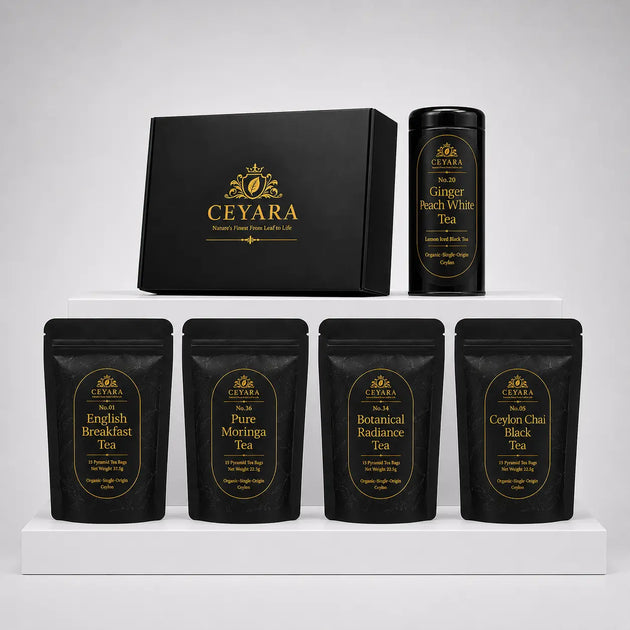
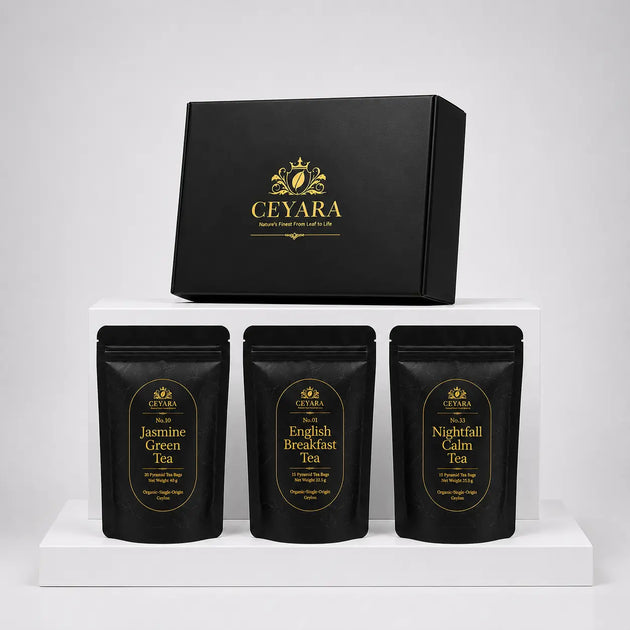
Every tea drinker has individual preferences. CEYARA offers a selection of premium Ceylon black teas created for different tastes and moments throughout the day.
- English Breakfast Black Tea: A rich, full-bodied tea that is perfect for mornings and pairs well with milk.
- Earl Grey Black Tea: A classic black tea blend infused with bergamot for a bright and refreshing finish.
- Earl Grey Lavender Black Tea: A fragrant combination of bergamot and lavender that is well suited to a relaxing afternoon tea.
- Ginger Black Tea: A warming blend of Ceylon black tea and ginger.
- Cinnamon Black Tea: An aromatic and comforting tea that is ideal for cooler days.
- Ceylon Chai Black Tea: A richly spiced blend for those who enjoy traditional chai served with warm milk.
Each blend highlights the versatility of authentic Ceylon tea while offering its own distinctive flavour experience.
Sustainability and Ethical Sourcing
The story of Ceylon tea is closely connected to Sri Lanka's people and landscapes. For generations, tea growers have relied on responsible practices to preserve the environment and support local communities.
Today, many tea gardens continue to embrace farming practices that help protect soil health, conserve water and support biodiversity.
Ethical sourcing also plays an important role by recognising the dedication of the growers, tea pluckers and factory teams who contribute to every harvest.
At CEYARA, sourcing tea directly from its country of origin reflects a commitment to authenticity, traceability and long-term quality. By choosing responsibly sourced Ceylon tea, you are supporting a tradition built on craftsmanship while helping to preserve Sri Lanka's tea heritage for future generations.
To learn more about our approach, visit the CEYARA Our Story page and discover the values behind every cup of CEYARA tea.
Storage Tips
Proper storage helps preserve the fresh flavour and aroma of your tea. Keep Ceylon black tea in an airtight container and store it in a cool, dry place away from direct sunlight, moisture and strong-smelling foods such as coffee or spices.
Tea naturally absorbs surrounding odours, so careful storage is essential. When protected from heat, light and air, your tea will remain fresher for longer, allowing you to enjoy the bright, balanced flavour that makes authentic Ceylon tea so distinctive.
Conclusion
From its fascinating history and diverse growing regions to its bright flavour and expert craftsmanship, Ceylon black tea offers a tea experience unlike any other. Every cup reflects the unique landscapes of Sri Lanka and generations of knowledge that have made Ceylon tea one of the world's most respected black teas.
Whether you enjoy a classic breakfast brew, a refreshing Earl Grey or a warming cup of chai, understanding how Ceylon tea is grown, crafted and brewed allows you to appreciate every sip even more.
If you're ready to experience authentic Sri Lankan tea, explore the CEYARA Black Tea Collection and discover premium blends crafted for every tea ritual.



Leave a comment
This site is protected by hCaptcha and the hCaptcha Privacy Policy and Terms of Service apply.