




Ceylon vs Japanese & Chinese Green Tea: A Full Comparison
When it comes to green tea, Sri Lanka rarely enters the conversation. This makes it a missed opportunity. Sri Lanka’s green tea offers a bold, brisk flavor from Sri Lanka's high hills, contrasting with Japan's savory, steamed leaves and China's classic, pan-fired sweetness.
In this blog, we compare the exact differences that set green tea grown in Sri Lanka apart from green teas from Japan and China.
Terroir and Altitude
The terroir is the unique soil and climatic conditions that ultimately shape the tea flavour and aroma. Factors like altitude determine the terroir of the tea. These two factors are also major differentiating points between these teas.
Ceylon
Terroir
The cold climate has a great effect on its naturally sweet and smooth flavour. This is because the leaves develop slowly in cool temperatures (roughly 15–26°C) under limited sunlight. That slow growth gives it a naturally sweet, smooth character with greater complexity than lowland-grown leaves. Limited sunlight affects the tea’s sweetness. This makes Sri Lanka's misty central highlands, Haputale and Boralanda, major hotspots for growing green tea.
The shallow root system is well supported on steep terrain by the soil’s unique clay composition. The tropical dual monsoon rains and winds also contribute significantly to this.
Altitude
Cultivated at high altitudes, typically above 1,200 meters above sea level, they fall under high-grown tea. Compared to lowland plantations, they are harvested at least 20%-30% less, making the high-prized premium green tea choice around the world.
Their plucking cycles at their altitudes can take up to 10-14 days between two cycles. They can be harvested year-round.
Japan
Terrior
Japanese green tea grows in regions like Shizuoka and Kagoshima, which are volcanic zones. Unlike Ceylon-grown tea, which grows on acidic, nutrient-rich soil, these grow on their nitrogen-rich soil, volcanic ash soil. This gives them their unique flavour and look.
This soil is full of porous rocks, made by magma from volcanoes with gas bubbles trapped inside that have hardened. This causes the soil to be nitrous, by accumulating organic matter in this porous soil and rocks. The savoury flavour known as umami in Japanese) you taste in Japanese green tea is a result of this.
Each of the four seasons is assigned in their harvest schedule. Spring yields the best harvest; summer and autumn give the bold, bulk yields. Winter keeps the plant dormant and stores deep nutrients, which explains its deep green color.
Altitude
In Japan, green tea is grown at a wide variety of elevations. This can be at sea-level flatlands up to mountain peaks over 1,000 meters high. Flat coastal tea fields are machine-friendly terrains, making mechanical harvesting a common practice unlike Sri Lanka’s handpicked culture.
China
Terrior
Chinese green tea cultivation mainly takes place in provinces like Zhejiang, Anhui, and Jiangsu. These regions sit on older, more weathered(broken down) soil compared to Japanese soils. The loose grain soil is packed with forest humus and nitrogen, which gives it its thick, velvety taste with toasted notes.
Climate is an aspect where the two teas become the same again. The mist and shade block UV, which prevents the bitter tannins from developing, giving sweet savour flavours.
Altitude
This tea is also cultivated across a range of altitudes, from low river valleys to high mountain peaks around 1,000 metres. The low-to-mid altitude grown Chinese teas taste highly aromatic and have a toasted nutty flavour, while high-grown teas taste crisp and thick-textured.
Processing: The Real Difference
If you know nothing about green tea, here’s the first thing to know. The main difference between green tea grown in Sri Lanka and those from Japan and China is their flavour and aroma. This differentiation isn’t just a result of a single geographical placement. It has a major role to play in what happens in the few hours after it’s picked.
All green tea starts the same way. Fresh leaves are picked, then quickly heated to stop oxidation before it can turn the leaf into black or oolong tea. That heating step is where the three traditions split apart.
China: Pan-Firing
Chinese green tea is traditionally pan-fired. This means the harvested leaves are tossed and rolled by hand or machine in a hot wok or drum. This dry-heat method drives off moisture quickly and gives the leaf its signature toasted, nutty character. After the process, you’ll notice the leaf itself often stays whole or lightly rolled.
Japan: Steaming
Japanese green tea takes the opposite route. Instead of dry heat, the leaves are steamed. This is a gentler, moisture-based method that locks in chlorophyll and vegetal compounds before they can fade. This is why sencha and matcha taste so distinctly grassy, marine, and umami-forward. Steaming preserves the leaf's rawest, freshest character rather than toasting it away. The leaf is typically cut finer as a result of this method, too.
Ceylon: Orthodox Processing
Green tea from Sri Lanka follows neither path exactly. It uses orthodox processing, which is the same leaf-by-leaf method used for Ceylon black tea. This method is adapted by Sri Lankan tea makers to stop oxidation early.
The leaves are withered to soften them, then rolled to release their oils, then pan-fired to halt oxidation and lock in colour and character. It sits closer to the Chinese tradition in method. But the outcome is shaped by something neither China nor Japan can replicate: Sri Lanka's high-altitude, unique terroir discussed above.
This is really the heart of why "Sri Lankan grown green tea" is its own category, and a uniquely different cup, not a regional variant of something else.
Flavour Comparison: Ceylon vs Japanese vs Chinese Green Tea
In summary:
Japanese Green Tea:
Taste: Vividly vegetal, grassy, and savory.
Used in: Standard Sencha alongside everyday meals. Creating high-grade matcha powder and tea.
Chinese Green Tea:
Taste: Earthy, herbaceous, and softly sweet.
Used in: Creating globally exported mint tea, floral infusions, and all-day sipping.
Ceylon Green Tea:
Taste: Full-bodied with a bright, clean, and punchy character.
Used in: Creating floral, fruity, and herbal-flavoured green tea. Morning and Afternoon tea parties in the UK and all over the world.
A Peek at the Market Share
In terms of volume, Japan and China collectively occupy the majority of the USD 20 - 25 billion-valued global green tea market as of 2026. Despite Sri Lanka being a major player in the global tea trade, it holds only a minuscule share of this market.
High production costs of Ceylon tea due to methods like hand-plucking in order to maintain its premium quality make it hard to compete with mass-produced green tea from other countries. However, this positions it as a premium, wellness-focused delicacy.
Interested in partnering with us for green tea wholesale buying? Choose us as your Ceylon Tea supplier in the UK.
In Conclusion
Ceylon-grown green tea was never going to out-shout Japan's sencha or China's centuries of green tea tradition, and it isn't trying to. What it offers is a genuinely different cup: the same careful, leaf-by-leaf orthodox process behind Ceylon's celebrated black teas, turned toward a lighter, greener leaf.
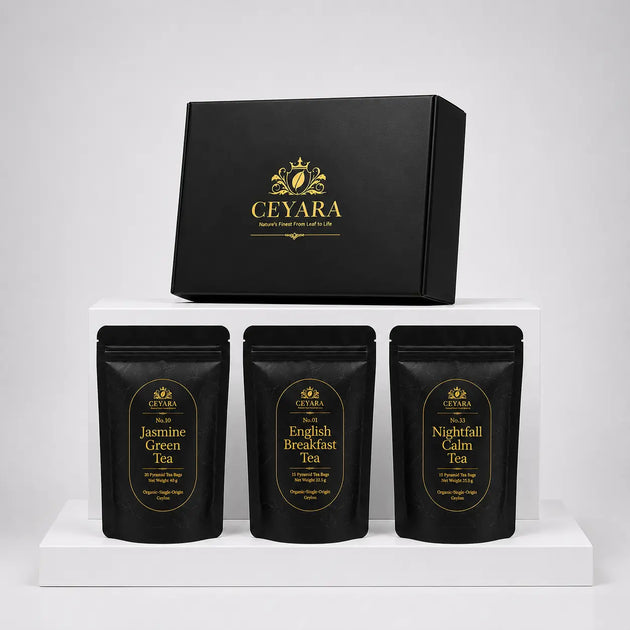
If you've only ever compared Japanese and Chinese green tea, a Ceylon cup is worth adding to that conversation. Start with our Jasmine Green Tea, a light, floral expression of everything that makes Ceylon green tea a category of its own. Or read more about its origins in our sourcing philosophy.

Written by Ceyara Ltd



Leave a comment
This site is protected by hCaptcha and the hCaptcha Privacy Policy and Terms of Service apply.